Sunday, November 24, 2019
Thursday, January 31, 2019
The Trailblazing Peruvian Photographer Who Captured a Vanishing World

Martín Chambi, “Two Giants from Cusco” (1925) (all images courtesy of Instituto Moreira Salles)
In 1905, when the Andean photographer Martín Chambi was 14 years old, he traveled to northwestern Peru with his father, who had a job working in a gold mine there. At the time, there were no indigenous photographers in the country, and images of the Quechua people were mostly captured through the lenses of French and American photographers. But after meeting the photographer for his father’s mining company, Chambi became enamored with the camera. He soon apprenticed himself to Max T. Vargas — one of the earliest Peruvian photographers — and a legend was born.
“I’ve read that in Chile they think that the indigenous South American peoples have no culture, that they are not civilized, that they are intellectually and artistically inferior to European white peoples,” he wrote in 1936, long after he’d become a celebrated Peruvian photographer. “[My] artworks are a graphic testament that is more eloquent than my own opinion … I feel I am representing my race; my people will speak through the photographs.”


Face Andina – Fotografias de Martín Chambi continues at the Instituto Moreira Salles (Rua Piauí, 844, São Paulo, Brazil) through February 22, 2015.
Friday, December 21, 2018
Yazidi Genocide: Photo Series By Italian Photographer Giulio Magnifico
This is a gallery of my reportage about the Yazidi genocide perpetrated by ISIS from 2014, when about 4,400 Yazidis were killed by ISIS and 10,800 injured or kidnapped. The genocide happened in the Northen Iraq, in the Sinjar province. When the ISIS entered in the province of Sinjar, in the August 2014, about 50,000 Yazidis escaped from the death taking refuge on the mount Sinjar above the city. They defended their family with weapons for months, from above the mount, but the ISIS had surrounded the mount and the impossibility to receive food and water killed thousands of Yazidi in the Mount Sinjar.
These images show how the Yazidis people are forced to live from 2014 until now, in the mount Sinjar and the refugees camp. Because their house was destroyed by ISIS and during the fights against it from the Iraqi and Kurdish militaries and they don’t have the money to rebuild them.

View of mount Sinjar where the Yazidi people escaped from ISIS

A little girl with many scars on his body and two incredible eyes. Sanjar mount

A little girl sits on her bed. Sinjar mount

A religious old Yazidi man. Sinjar mount

And old Yazidi man on his donkey with his kalashnikov. Sinjar mount

A child is standing outside his tent in Mount Sinjar

A child in the Sinjar mount


Camps in Sinjar mount

The lunar view of the refugees camp on top of Sinjar mount

The lunar view of the refugees camp on top of Sinjar mount

A father show me the place where a sixteen years young girl has just killed herself due to the bad conditions of his life in the Sinjar mount

The destroyed villages under the Sinjar mount were the Yazidi people lived

Two boys in an almost empty village under the Sinjar Mount

The unofficial camp in Sharya, near Dohuk

A child is sleeping inside a mud house, in an unofficial camp in Sharya, near Dohuk

A child in the middle of the garbages. Unofficial camp in Sharya, near Dohuk

A mother is walking through a sand storm in an unofficial camp in Sharya, near Dohuk

A little yazidi boy and his teddy bear. Unofficial camp in Sharya, near Dohuk

A little girl in the refugees camp of Khanik, near Douhk

A little yazidi girl sleeping on the ground in a house made of straw, in a unofficial refugees camp on the border of the street near Douhk

A mother is cleaning some vegetables in a unofficial refugees camp on the border of the street near Douhk

A little girl inside a tent in the refugees camp of Khanik, near Douhk

A little Yazidi girl sitting alone in the middle of the tents of Khanik refugees camp, near Douhk

The eyes of a Yazidi girl in the refugees camp of Khanik, near Douhk

A litle girl in the refugees camp of Khanik, near Douhk

Men are resting in a unofficial camp in Sharya, near Dohuk

The gaze of a yazidi young girl in a unofficial camp in Sharya, near Dohuk

An old woman sits outside her mud house in a unofficial camp in Sharya, near Dohuk

Two orphans children in a unofficial refugees camp in Sharya, near Dohuk
About Giulio Magnifico
My name is Giulio Magnifico and I’m a photographer of 31 years. I was born and I live in north Italy, in Udine, I studied photography in high school and I photograph since some years ago preferring reportage photography, so I traveled a lot, in 2014 I went to Syria, Iraq, Sicily, Paris and in 2015 went again to the Syrian and Croatian borders in order to make some reportage. I collaborated with the German newspaper ‘Der Spiegel’, I expose in a gallery in London called Albumen Gallery and in a photographic studio in Udine, I presented some conferences in photographic circles in my region, I presented my works also at some high schools. In the last year, I made a personal exposition in Tolmezzo (a city near Udine), sponsored by the culture department, with 70 photos and one video and in summer 2016, I will have a personal exhibition at the MEDphotofest in Sicily.
What I would like to communicate with my pictures is the humanity of each subject or scene that I capture. My passions are the reportage and street photography, trying to convey more emotion, curiosity or feelings to the viewer and possibly “enter” into the picture as I did at the time of the ‘click’.
Sunday, October 14, 2018
Sengo Pérez
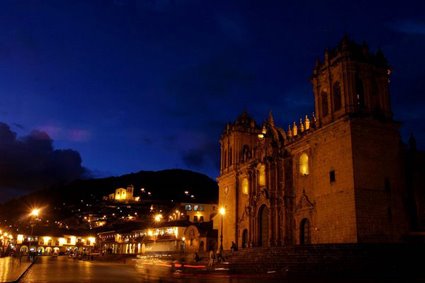
Nocturnia cusqueña.

Plaza de armas de cusco.
Ollantaytambo

Birth
Chiaraje, a violent rite (To understand the photos that follow)
Chiaraje, chiaraje! .. the word repeats itself and from mouth to mouth it becomes a cry, summons, provokes, multiplies as an echo and ignites the heights of Canas, there is no talk of anything else. January 20 arrives, Chiapas Pampa at 4500 meters high, naked of human life, populated by moss and ichu and occasionally visited by some lost llama or alpaca, will dress for a day of men who chose it as the setting for a violent confrontation between neighbors that will decide the fertility of the land for a year. And that is not little, rather it is much for those who live on it. For one day, peaceful comuneros from Checca, Langui and Layo become warriors.
"We are going to the battlefield of Chiaraje
Since the cock crows, mounted on our horses,
Linguis dogs.
We are not afraid, to the hail of stones,
we are brave warriors, although the river is stained with blood "
From eight o'clock on the eve of combat through radio Link warms the confrontation from the side of Checcas, sharp voices feminine accompanied by the ancestral pinkullo, call the fight. The list of participants with extremist messages such as "we are willing to die" is read. And it is that even this is reached, and although in recent years the cruelty of the battle has diminished, it is not uncommon to find fatal victims, and in reality for both sides this is necessary, the blood shed will make the earth more fertile.
On the side of Langui and Layo (Quehue community members should also be counted, perhaps the most fierce of this side) the issue seems to be more sporty and above all more commercial.
Is that from this side access to the "battlefield" is carried out comfortably on anything that is supported on wheels, mobilizing a huge number of merchants.
Cañazo, beer, chicha, anisette in the drink category, corn with cheese, fried chicken and trout,
lamb head broth and even ceviche! They complete the gastronomic offer of more than fifty merchants for something more than a market of a thousand consumers.
The changing climate, in minutes the scorching sun gives way to a fierce hail, causes the necessary acquisition of plastic ponchos to three suns (the same ones that cost one below).
But more, or less commercial, this pucllay or warrior game has little fun. And despite countless efforts to ban it, tradition imposes itself on the authorities.
About its origin much is said but nothing can be proven, the most repeated theory is that there, in that pampa Jose Gabriel Condorcanqui trained his army, Tupac Amaru II in his finally unsuccessful attempt to oppose the invading Spaniards.
These warrior practices would have continued to be associated with the fertility of the land for the winning side.
The battle consists of driving or pushing the adversaries back to their own terrain until they are forced to retreat.
They speak of infantry and cavalry themselves. The first ones, on foot, carry huaracas or slings with which they throw stones, and liwis, a kind of braided leather whips with heavy metal objects on their tips that transform them into deadly weapons and that are used in the confrontation body to body. This same weapon used the riders. But modernity has also reached this unique ancestral rite and the use of helmets to protect and put on soccer shoes is becoming more and more pronounced in a terrain muddied by the fall of rains very common at this time.
The combat is developed in two times, the first in the morning until noon when there is a parenthesis for the participants to recover their strength with a delicious lunch.
At about three in the afternoon everything is resumed and this time with more violence, the accelerated consumption of alcohol during the meal transforms the "warriors" into less aware of the risk and increases their ferocity.
Before the night falls, the duel ends, always with a territorial winner, who would bring the other to his land but in reality there are neither winners nor losers, wounded on both sides to clean their wounds, and the "cane" will make it more bearable the pain.
The next day, the rude combatants will return to be peaceful neighbors and take care of the land, only until next January 20.
Chiaraje

Pampa del Chiaraje, the tradition awaits.

Ancient wind instruments call the fight.

Carajooooooo! Intoned by the cañazo the infantes advance to the confrontation.

Deadly weapon, the preferred one for the curpo a cuerpo.Modernidad in the liwi and in the attire.

The battle begins with the "kidnapping" of a horse. "I knocked him out" declares the resonsable (the rider, of course) The owner will come later to negotiate the delivery of the horse, everything can be arranged by a box of beers.

The infantry in action.

Huaraca or honda, the preferred weapon.

The distances are shortened, the stones hurt more.
ult

Heroes. The blood of the wounded fertilizes the earth.
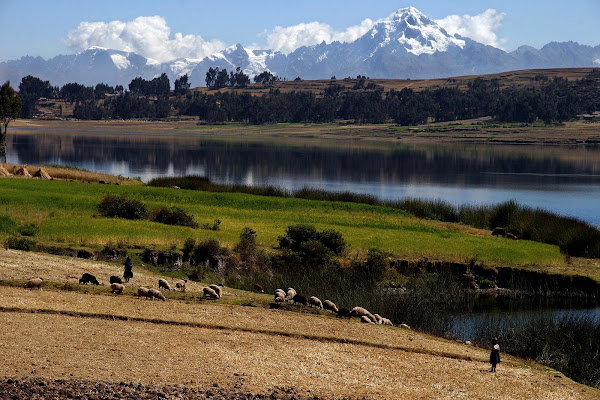
lagoon

Piuray Lagoon in Chinchero.
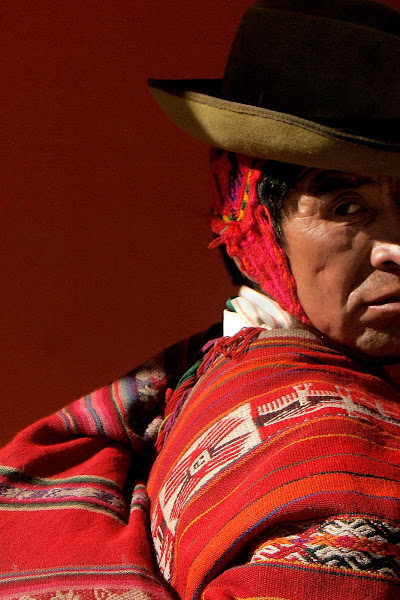
Of red poncho

Gaucho batllista? ... noooo. Peasant from Ollantaytambo, in the vicinity of Cusco.
Market

Vegetarian terror in the market of Ccascaparo, in Cusco.
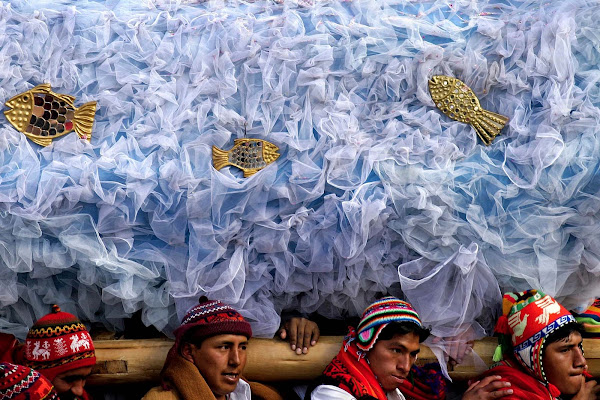
Corpus Christi

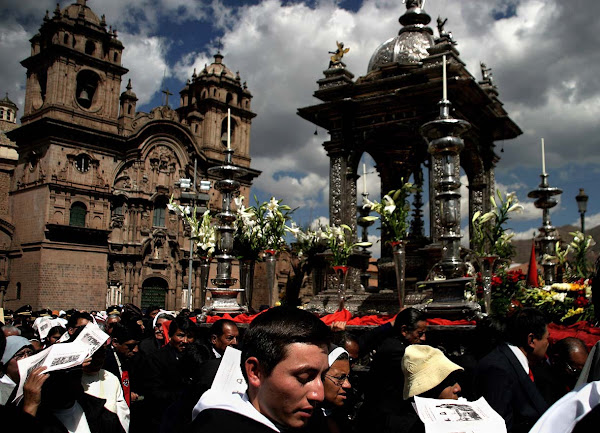
Cargadores carry the San Sebastián walk during the May Corpus Christi procession in Cusco.
Corpus Christi

Craftswoman

Painted face

A precocious fan prepares to "suffer" a match of the Peruvian soccer team
Taytacha

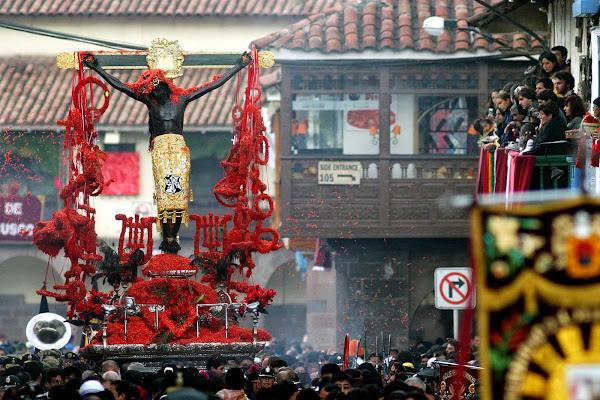
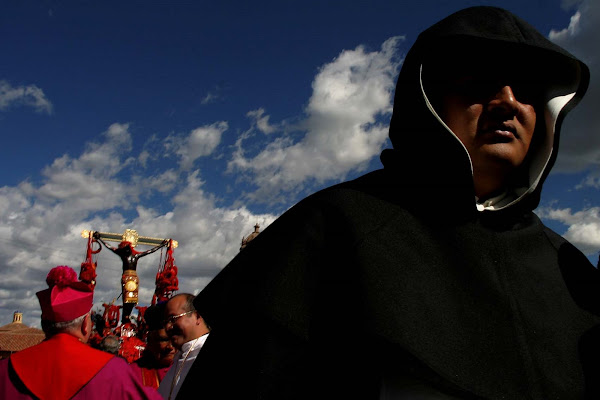
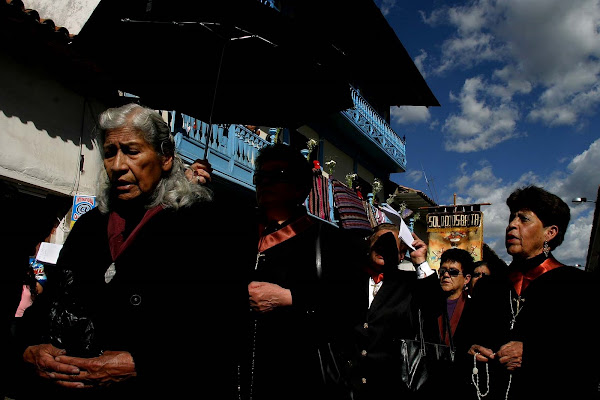
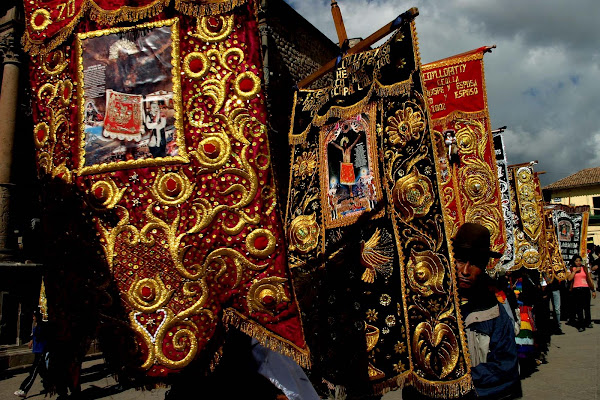
Procession of the "Lord of tremors" through the streets of Cusco. The popular faith attributed to him having interrupted an earthquake that took place in the city on May 31, 1650 when desperate faithful took him to the atrium. Since then his image is venerated and taken out in procession every Monday of Easter.
Taytacha

A band of music puts rhythm to the procession of the Lord of the Earthquakes in Cusco.
Taytacha

Taytacha

Taytacha

Ronderos

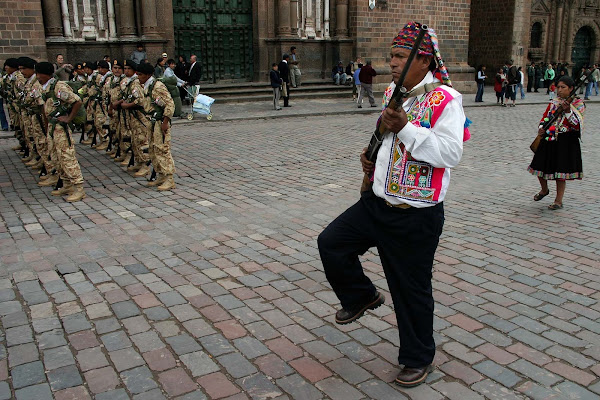
Members of a peasant Ronda (self-defense) parade through the streets of Cusco. The state provided them with these shotguns, but they lack cartridges (!)
Rondera

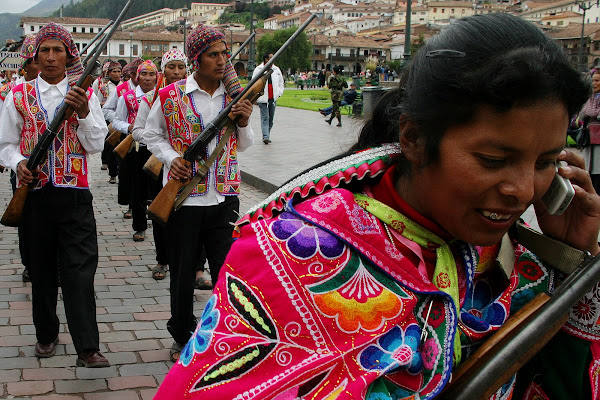
Rondera (member of a self-defense committee) the state provided them with weapons, not ammunition. The cell phone is paid by them.
Ronderos 2

A member of a campesino round (Comité de autodefensa) parades through the streets of Cusco.
Koricancha

Inca Palace of Koricancha in Cusco, on which the church was built respectfully-the Convent of Santo Domingo.
Pisac

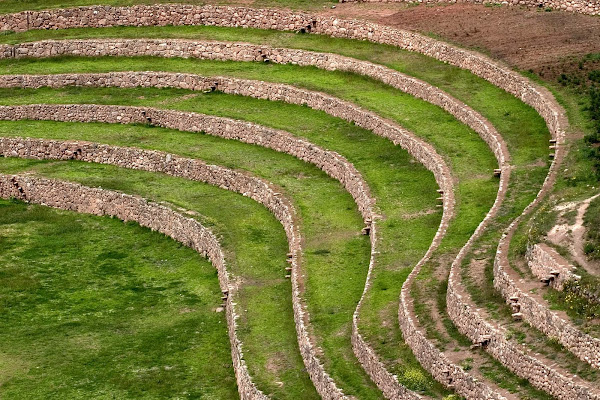
Moray

Mooring platforms in Moray.
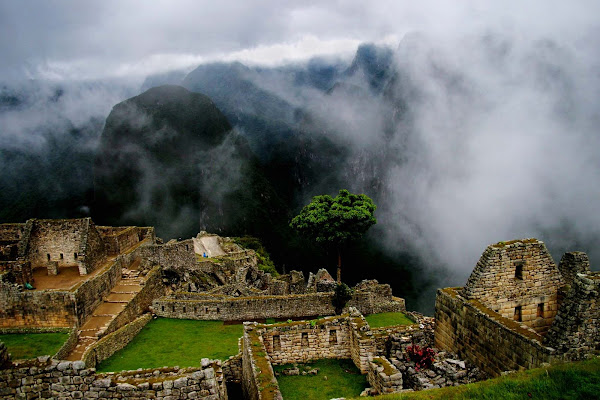
Macchu Picchu
Macchu Picchu.

Detail of a wall of the citadel.
Macchu Picchu

An opening in the clouds allows the sun to illuminate a sector of the citadel.
Macchu Picchu

Pre-Inca Citadel (it's my opinion)
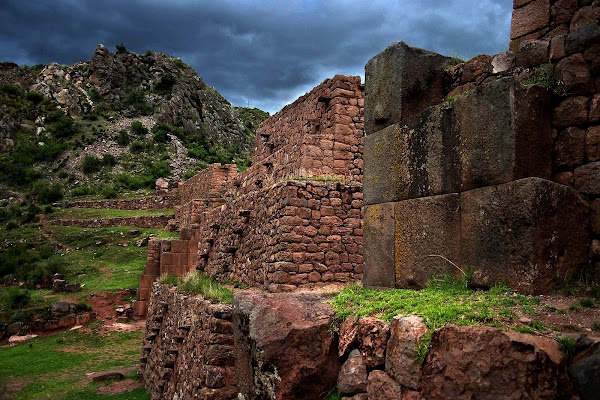
Pikillacta

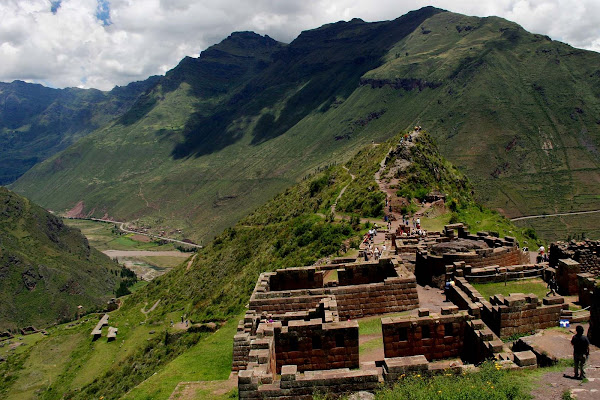
Remains of an Inca construction on the outskirts of the city of Cusco.
Tipón

Remains of an Inca construction where water was adored in the vicinity of Cusco.
Coylloritty 2

Devotees of the Lord of Coylloritty walk through El Sol Avenue, in Cusco.
Coylloritty

Devotees of the Lord of Coylloritty through the streets of Cusco
land

Couscous potter.
painted faces

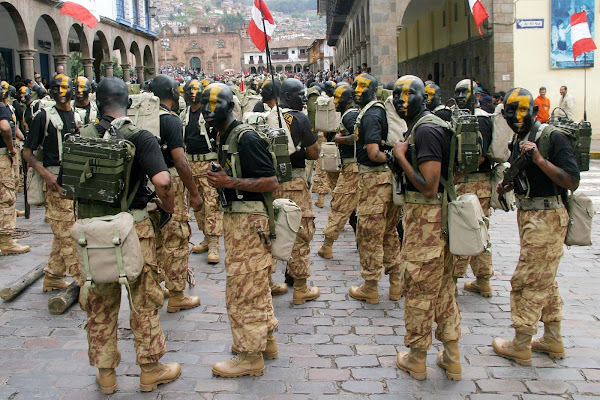
A group of Peruvian commandos wait to parade in the city of Cusco.
Caritas painted2

Commandos of the Peruvian army wait to parade in the Plaza de Armas of Cusco
Fatherland and amen.

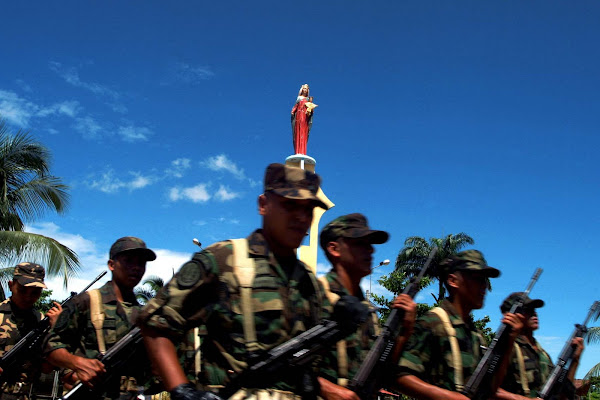
Soldiers of the Peruvian army parade through the streets of Puerto Maldonado in the department of Madre de Dios, Peruvian Amazon.
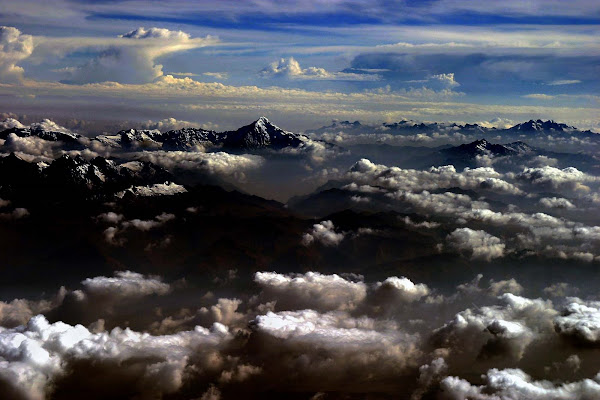
Cloud 6

cloud 5

Cloud 4

cloud 2

Cloud

Vote

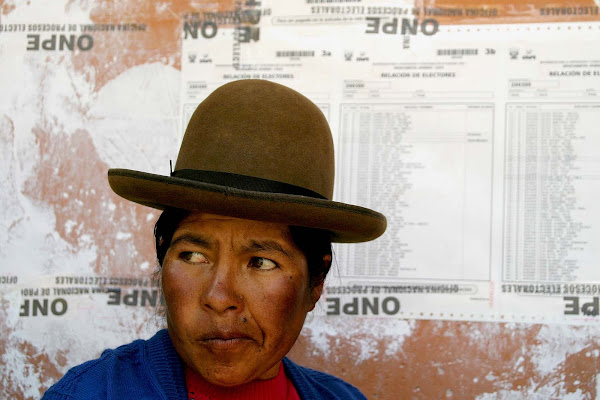
After voting, in Ollantaytambo, Cusco.
Referendum

A peasant girl waits to vote in the city of Pisac, Cusco.
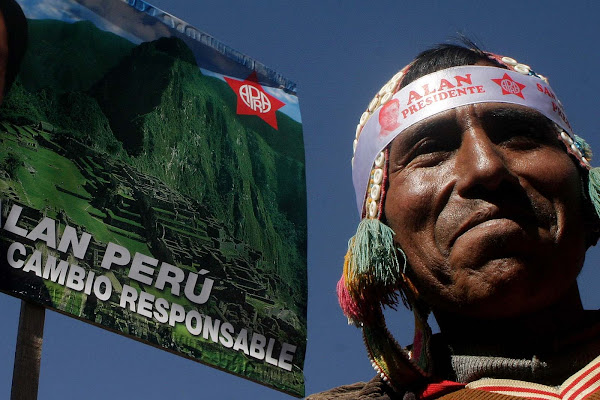
A-Lan Peru

Irresponsible vote.
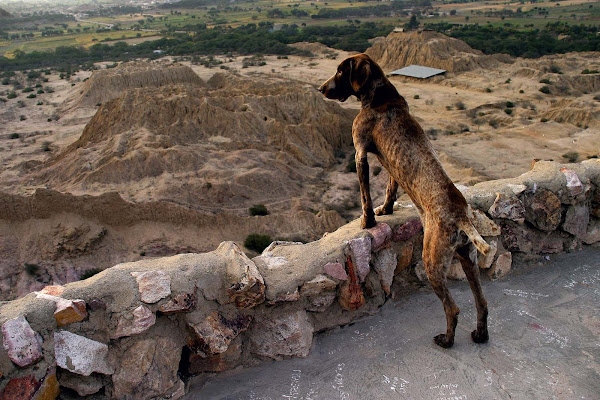
Túcume

A dog observes? the pyramids of Túcume, in the north of Peru.
Pututo

A farmer calls a meeting by blowing a "pututo" (snail) during an event of indigenous people of South America in Cusco.
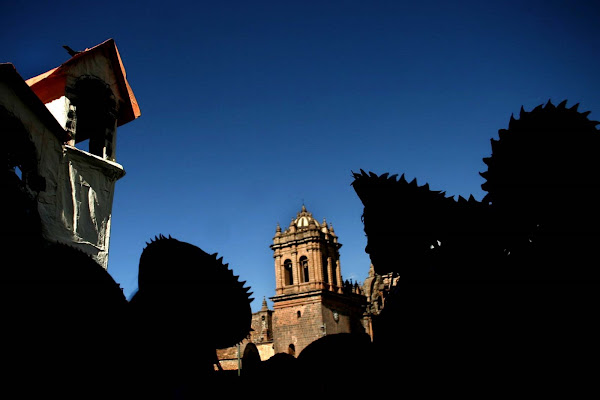
Parade ground.

During a Sunday parade in Cusco.
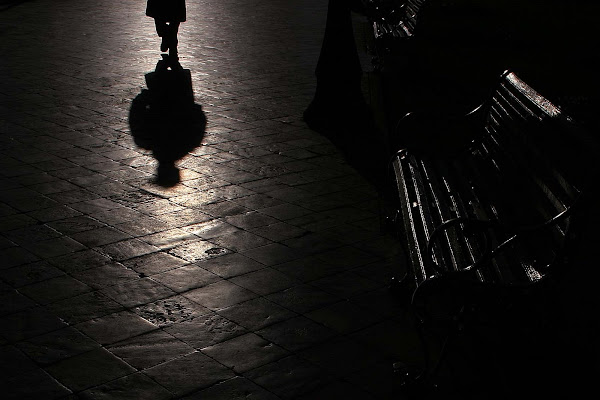
Shadow

Plaza de Armas in Cusco.
Panchromatic

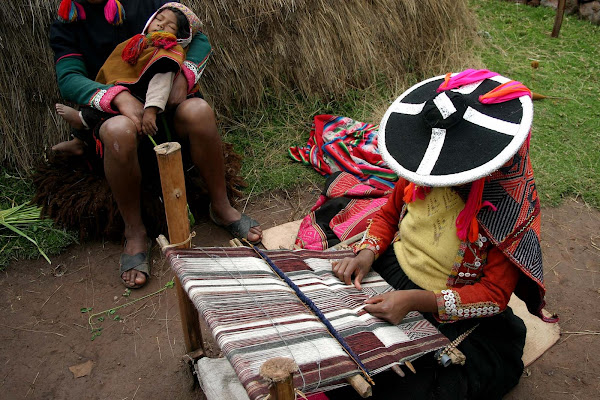
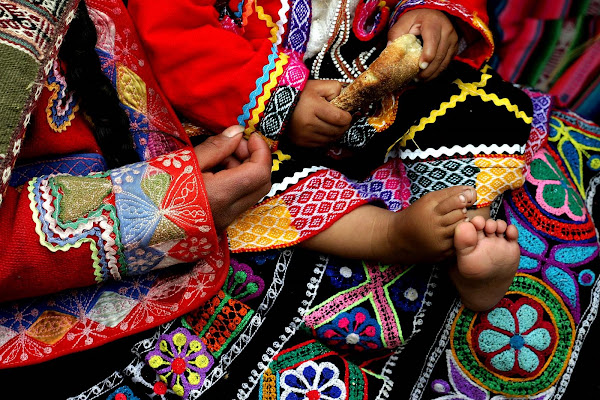
Detail of the dress of a Cuzco peasant with her daughter.
Chaman serrano

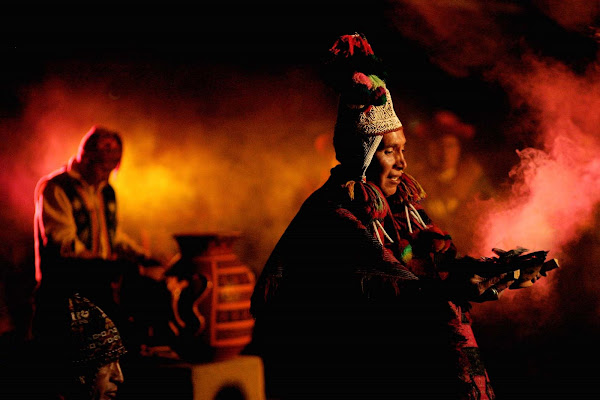
An Andean shaman performs a ritual called "payment to the earth" in Cusco.
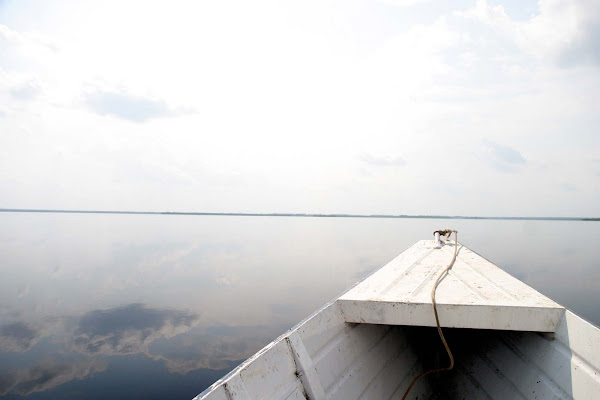
Lake.

Rimachi Lake, in the Peruvian Amazon. Habitat of the Candoshi ethnic group.
Candoshi birth

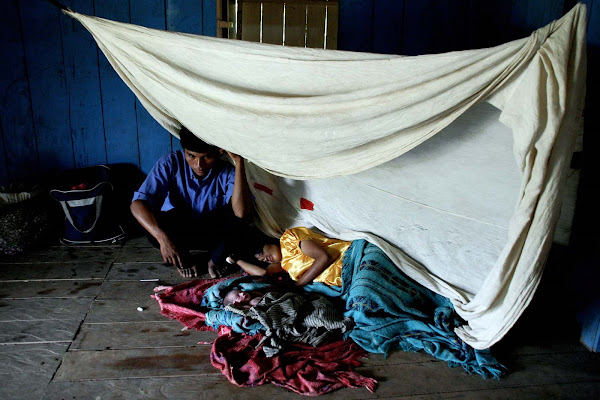
A couple of the Candoshi ethnic group within minutes of receiving their first child. Although the medical post has beds, these natives prefer that the birth occurs on the floor. This ethnic group is threatened with extinction due to hepatitis B
Candoshi child

A candoshi child in his mother's arms. The color of the hands that hold it comes from a root they use to keep their hair permanently black.
Shaman (witch) candoshi

Portrait of a candoshi shaman. Little can do its magic to avoid the contagion of hepatitis B that threatens to extinguish its people.
Candoshi Family

The Candoshi ethnic group in the Peruvian Amazon is in danger of extinction due to hepatitis B
Candoshi woman

An elderly woman of the Candoshi ethnic group waiting to be seen at a medical post in the Peruvian Amazon, this group is in danger of extinction due to hepatitis B
Crying candoshi

Woman with masato.

A woman from the "jíbaros" group holds a bowl with masato, a beverage consumed in the Amazon and consists of softening cassava with her own saliva.
Day of the Dead

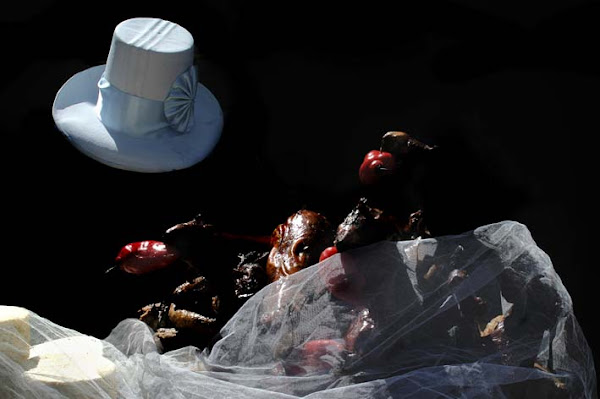
A real dead is mixed with two dead laughing
Church of Huaro

The paintings depicting hell on the colonial walls of the church of Huaro, south of Cusco, were intended to convince the indigenous people of "good manners" to join the Catholic Church.
Lamay

Members of a folk group formed by neighbors wait to participate in the celebrations of Santa Rosa in Lamay, near Cusco.
Chiriucho

The chiriucho, typical Cusco dish prepared during "the corpus Christi", at the end of May.
The Arab

Rolly Rojas, "the Arab" at the door of the residence of the Japanese ambassador in Lima during the takeover by the Tupac Amaru revolutionary movement in 1997.
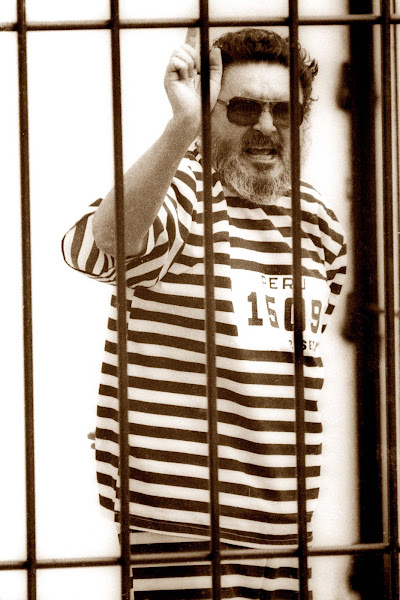
Chairman Gonzalo

The leader of Shining Path, Abimael Guzmán during his presentation to the press in Lima.
Uruguay

Tunnel of the Centenario Stadium, Montevideo.
Uruguay 1

Sweet waters ?
Uruguay 2

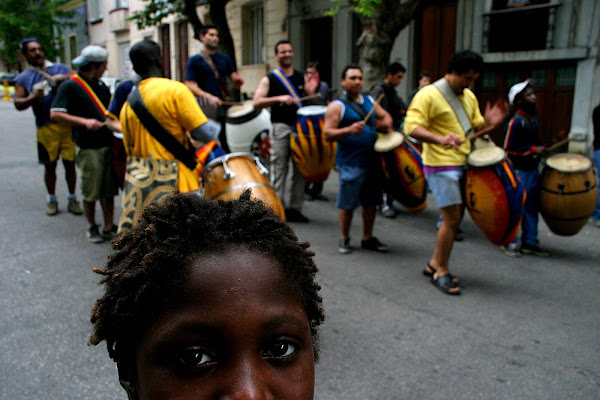
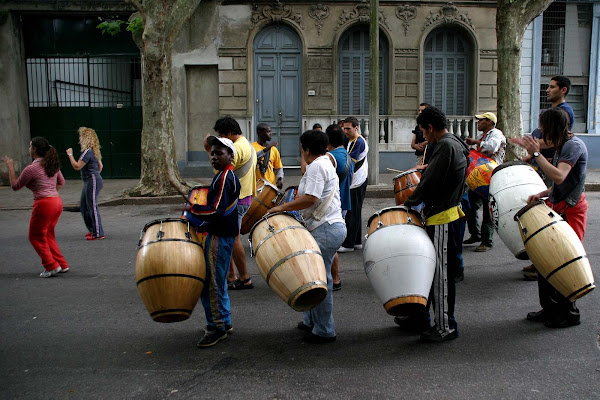
Candombe on Calle Durazno, Montevideo.
Uruguay 3

Candombe on Calle Durazno, Montevideo.
Uruguay 4

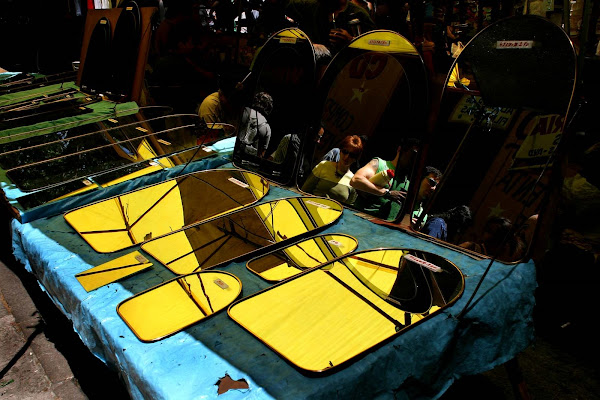
Tristán Narvaja Fair
Uruguay 5

Roasted raw.
Uruguay 6

Arquerito in the rambla of Montevideo.
Uruguay 7

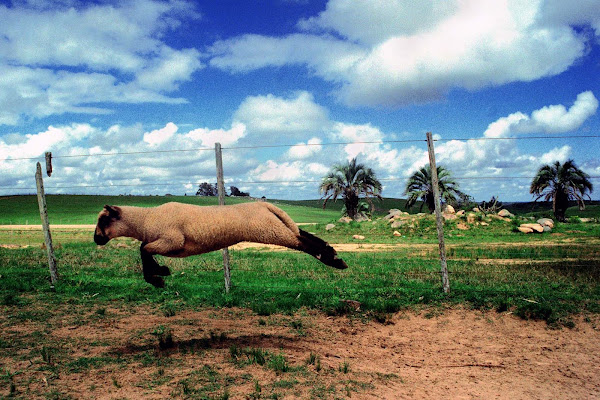
In the Santa Elisa ranch, 25 kilometers from Melo, Uruguay.
Uruguay 8

Sheep leather drying in the sun.
Uruguay 10

Paisano staying in "Santa Elisa" about 25 kilometers from the city of Melo, in Uruguay.
Uruguay 9

Fair of Tristán Narvaja in Montevideo.
Uruguay 11

Gonzalito. Port Market, Montevideo.
Uruguay 13

Raúl Sendic, tupamaro leader, under the vine at his house in Ejido, Montevideo.
Uruguay 14

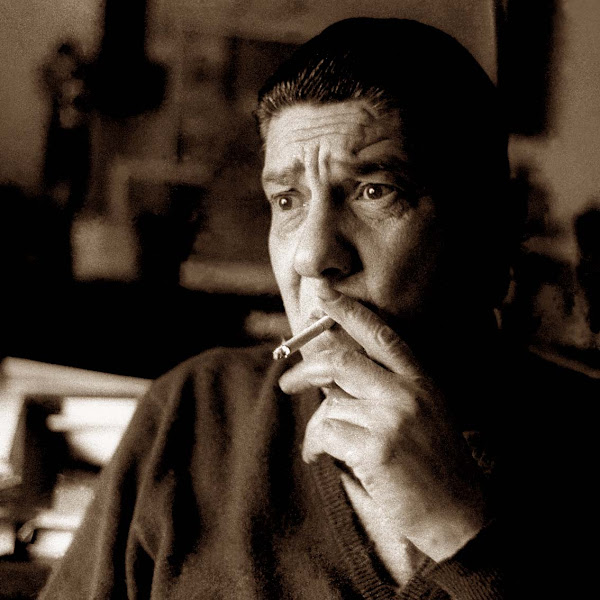
Alfredo Zitarrosa.
chauuuuuuuuuu

Eduardo Mateo, musician.
Subscribe to:
Posts (Atom)